Botanical Branch Embroidery Design Review
First Impressions: Elegance Meets Commercial Viability
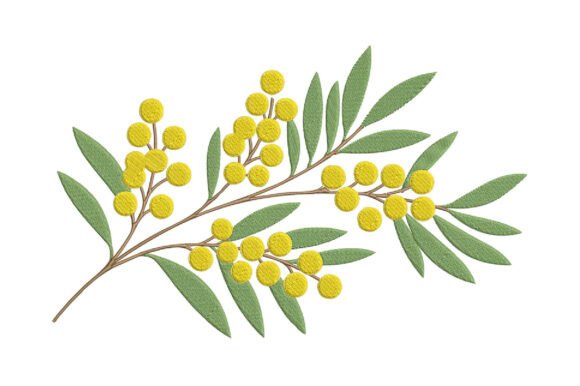
As an embroidery designer who specializes in branding for small businesses, my first assessment of any machine embroidery design focuses on versatility and stitch integrity. The Botanical Branch Embroidery Design immediately strikes a balance between organic elegance and structural stability. Featuring a long leafy branch with delicate yellow berry-style flowers, this design avoids the common pitfall of floral patterns being too dense or overly intricate for commercial use. Instead, it offers a refined aesthetic that feels professional yet approachable.
For business owners in the boutique, café, florist, or handmade sectors, this design reads as premium without appearing stuffy. It possesses a natural fluidity that suggests craftsmanship, making it an excellent candidate for brands wanting to emphasize sustainability, nature, or artisanal quality. Unlike generic clip-art florals often found in standard digitizing libraries, the Botanical Branch Embroidery Design has a deliberate composition that allows it to function as a standalone logo accent or a complementary element within a larger brand identity system.
Real-World Applications for Small Business Merch
When evaluating this embroidery file for production, I look at how it translates across various merchandise types. The linear nature of the branch makes it uniquely adaptable for specific placement areas that circular bouquets cannot accommodate.
- Apron Embroidery: For bakeries and coffee shops, the vertical or diagonal flow of the branch works beautifully along apron straps or pocket edges. It adds a touch of sophistication to staff uniforms without interfering with functional pockets or name tags.
- Tote Bag Design: Canvas totes are a staple for retail and events. This design provides enough visual weight to be seen from a distance but retains enough negative space to prevent the fabric from puckering, which is crucial for unstructured bags.
- Cap Embroidery: While many floral designs fail on curved cap fronts due to registration issues, the slender profile of this branch allows it to arch naturally above a brim or sit cleanly on a side panel. It serves as an excellent secondary mark for outdoor brands or garden centers.
- Custom Apparel Sleeves: The elongated shape is perfect for sleeve cuffs or forearm placements on work shirts and hoodies, offering a subtle branding opportunity that feels like high-end streetwear rather than a corporate uniform.
- Embroidered Patch Production: Because the design features distinct outlines and filled elements, it digitizes well into merrowed-edge patches. These can be used as limited-edition collectibles for Etsy sellers or loyalty rewards for local customers.
Technical Considerations and Placement Warnings
Despite its versatility, the Botanical Branch Embroidery Design requires careful handling to ensure a professional finished product. As with any botanical motif, the interplay between stitch density and fabric texture is critical.
Navigating Fabric Texture and Stabilizer
The delicate yellow berry-style flowers likely involve satin stitches or light fill patterns. On textured fabrics like linen or heavy canvas, these details can get lost or cause thread breaks if not properly supported. I strongly advise using a high-quality cutaway stabilizer for stretchy knits and a tear-away for stable wovens. Always test on the actual garment material; what works on a sample towel may fail on a performance polo.
Sizing and Detail Integrity
While the design is elegant, resizing it too small poses risks. If you intend to use this as a tiny chest logo or label accent, verify that the smallest leaves and berries remain distinct. Below a certain threshold, intricate details turn into indistinguishable blobs. Check the minimum recommended size in your digital embroidery file metadata before committing to bulk production. Conversely, enlarging the design significantly may require re-digitizing to maintain proper stitch length and coverage, preventing gaps or excessive thread buildup.
Thread Color Contrast
The yellow berries are a defining feature, but yellow thread can sometimes disappear on light-colored garments or look muddy on dark ones. Ensure sufficient contrast against your base fabric. If embroidering on black uniforms, consider outlining the yellow elements with a metallic gold or cream thread to enhance visibility and elevate the perceived value of the custom apparel.
Impact on Brand Identity and Customer Perception
In the competitive landscape of small business merch, visual consistency builds trust. The Botanical Branch Embroidery Design contributes to a cohesive narrative. When customers see this motif repeated across packaging, staff wear, and promotional items, it reinforces brand recognition. The organic lines signal attention to detail, suggesting that the business cares about quality in all aspects of its operation.
For Etsy sellers and makers, incorporating this design into product labels or thank-you card holders bridges the gap between digital sales and tangible handmade product experiences. It transforms a simple transaction into a branded interaction. Furthermore, because the design falls under the "Bouquets" category but utilizes a branch format, it avoids the cliché of traditional floral arrangements, allowing modern businesses to leverage botanical imagery without looking dated.
Professional Designer Notes for Production Success
Before running a full production batch of commercial embroidery, follow this checklist to maximize the potential of the Botanical Branch Embroidery Design:
- Create a Printable Mockup: Before stitching, place a scaled image of the design on a photo of the actual garment. This helps visualize proportion and placement relative to seams, buttons, and pockets.
- Test in Black and White: Run a grayscale test stitch-out first. This reveals whether the design relies too heavily on color contrast or if the underlying structure holds up on its own. A good design should be recognizable even without color.
- Verify Hoop Size Compatibility: Confirm that the design fits comfortably within your machine’s hoop size with adequate margin for clamping. Crowding the hoop leads to tension issues and misalignment.
- Check Thread Colors Against Pantones: Don't rely solely on screen colors. Match physical thread samples to your brand guidelines to ensure the yellow berries align with your overall palette.
- Inspect Spacing and Jump Stitches: Review the digitizing path. Excessive jump stitches increase production time and post-processing labor. If the design requires significant trimming, consider editing the file to optimize the stitch sequence.
- Confirm Commercial Licensing: Always verify the license terms included with the design assets. Ensure you have the right to use the design on merchandise for sale, not just personal projects.
- Compare Beside Other Assets: Place this design next to your existing logos and icons. Does it share a similar visual weight and style? Consistency across design assets prevents a disjointed brand appearance.
Final Verdict for Business Use
The Botanical Branch Embroidery Design is a strong contender for businesses seeking to add a natural, elegant touch to their merchandise. Its linear composition offers unique placement opportunities that standard circular florals cannot match, making it particularly valuable for apron embroidery, sleeve detailing, and patch creation. However, success depends on respecting technical limitations regarding size, stabilizer choice, and fabric compatibility.
By treating this embroidery file as a strategic brand asset rather than mere decoration, small business owners can leverage its aesthetic appeal to enhance customer engagement and product value. Whether used as a primary logo for a florist or a decorative accent for a bakery uniform, this design delivers professional results when executed with care. Always prioritize testing and quality control to ensure the final embroidered output reflects the excellence of your brand.